
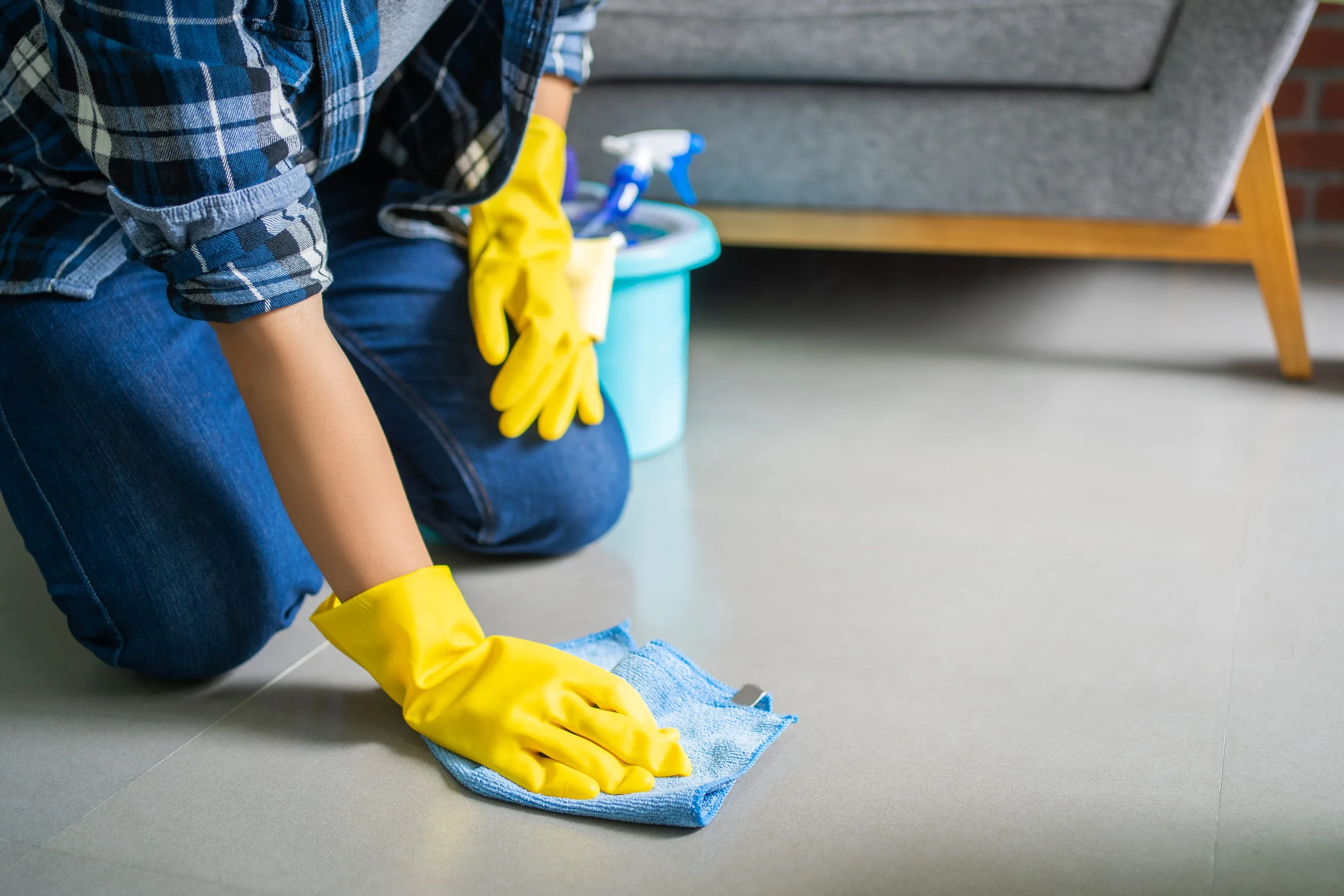
So the contractor’s gone. Floors swept, tools out, dumpster hauled off. Looks finished, right? Then you run a finger across the top of a door frame and it comes back gray. That’s remodel dust, and it’s fine enough to float, which is why it ends up on every ledge, inside every cabinet and deep in your HVAC system. A normal weekly clean won’t touch most of it. Here’s where to look, and how we get it out.
Why is remodel dust harder to clean than everyday dust?
It’s finer. There’s a lot more of it. And it lands everywhere at the same time.
Sanding, cutting and demo work send particles into the air, they drift room to room, and a broom just kicks most of them right back up.
Post-Construction Cleaning NJ
Some of that dust is worse than annoying, too. OSHA, the federal workplace safety agency, lists cutting and grinding concrete, block and tile as sources of crystalline silica dust. On job sites, its rules ban dry sweeping and dry brushing where that could add to exposure, unless wet sweeping or a HEPA vacuum isn’t an option. Compressed air? Same deal.
We take the same idea into people’s homes. Vacuum it. Wipe it. Don’t sweep it into the air you’re breathing.
Where does fine dust hide after a remodel?
Anywhere with a ledge, a lip or a gap. Door and window frame tops, fan blades, light fixtures, vent grilles, window tracks, the insides of cabinets and drawers, baseboards and outlet covers are the usual suspects.
| Spot | What we do |
| Tops of door frames and crown molding | HEPA brush attachment, then a damp microfiber cloth |
| Ceiling fans and light fixtures | Power off, then wipe every blade and shade |
| Vent grilles and returns | Vacuum, wipe, and swap the HVAC filter |
| Window tracks and sills | Crevice tool first, damp wipe after |
| Inside cabinets and drawers | Empty them, vacuum, wipe, let dry |
| Baseboards and outlet covers | Vacuum, then hand wipe the full length |
| Closets | Shelves, rods and floor, same as cabinets |
Cabinets are the sneaky one. From across the kitchen, they look fine. Then you grab a plate and it’s dusty. Same with closets where the door stayed open the whole job.
How do you remove fine construction dust without spreading it?
Work from the ceiling down. Dry first, wet second. Vacuum loose dust with a HEPA vacuum, then go over everything with a damp microfiber cloth, saving the floors for last.
Why the order? Do the floor first and you’ll be doing it again in an hour, after all that dust from the shelves and frames above has drifted down.
And the vacuum is a bigger deal than people think. According to the EPA, a true HEPA filter catches at least 99.97% of particles at 0.3 microns, which happens to be the hardest size to trap. A regular vacuum without one can blow the finest stuff straight back out the exhaust. You’d basically be redistributing it.
Wiping has its own trap. Use a cloth that’s damp, not soaked, and switch it out often. A dusty cloth just smears a thin film across the surface, and that film is why things still look hazy after you “cleaned.” Go easy on the water around wood cabinets.
Floors come last. Vacuum hard floors, then damp mop. On carpet, go slow and overlap your passes. If the dust has worked down into the pile, a professional carpet cleaning is what finally gets it.
What should you do with your HVAC system after a remodel?
Swap the filter. It’s an easy one to forget. Your heating and cooling system pulls air and dust from every room through the returns, so a filter that ran during the remodel has been catching all of it.
The EPA says every air filter needs periodic replacement to do its job. Upgrading? It suggests a MERV 13 filter, or the highest rating your system’s fan and filter slot can handle. Not sure what yours takes? An HVAC tech can tell you.
Clean the vent grilles while you’re there. Otherwise, the first cold night the heat kicks on, and that dust blows right back into the rooms you just finished.
Is the dust different if your home was built before 1978?
Possibly. Homes built before 1978 may have lead-based paint, and in those homes the EPA’s biggest worry is lead dust from chipped or worn paint.
The EPA’s advice for those homes: no dry sweeping. Use a HEPA vacuum where there’s visible dust or paint chips. Wipe hard surfaces like window sills and door jambs with a damp cloth or paper towel. And don’t strip lead paint yourself; bigger jobs go to a certified lead-safe contractor.
Got an older place in Ocean or Monmouth County and not sure what’s on the walls? Ask your contractor before cleanup starts. Not after.
Frequently asked questions
When should post-construction cleaning start?
Once the last trade is out and the dust has had a chance to settle. Start too soon and the next round of sanding undoes your work.
Can I just use my regular vacuum?
For a little dust on the carpet, maybe. For fine remodel dust, you want HEPA, so the smallest particles don’t blow back out.
Why do my surfaces still look dusty after I cleaned?
Usually one of two things. A dusty cloth left a film, or dust fell from up high after you’d already cleaned down low.
Do you bring your own supplies and equipment?
We do. Everything needed for the job comes with the crew, shoe covers included.
Wrapping up a remodel in Ocean or Monmouth County? Every job starts with a free walkthrough and a written proposal, so you know exactly what’s getting cleaned. Want more background first? Read What Are Post-Construction Cleaning Services?, Top 5 Tips for Post Construction Cleaning and How to Keep Your Home Clean During a Remodel, plus How to Clean Windows after Construction for the glass. When you’re ready, call 732-270-6556 in Ocean County or 732-671-4147 in Monmouth County, or use our Ocean County or Monmouth County contact page.